
As a build-up from the AU-AIP Water Investment Summit held in Cape Town under the umbrella of the G20 Presidency, AUDA-NEPAD and the Global Water Partnership Southern Africa (GWPSA) co-convened a high-level Roundtable on Early-Stage Financing for PIDA–AIP Water Projects at the 2025 III Luanda Financing Summit for Africa's Infrastructure Development, which took place from 28th to 31st October 2025, in Luanda, Angola. The Summit is the African Union’s leading forum where Heads of State, investors, and innovators converge to drive transformative infrastructure projects.
The high-level roundtable on Early-Stage Financing brought together project sponsors, governments, development finance institutions, private investors, and project preparation facilities to accelerate early-stage water investments across Africa. The session focused on resolving common bottlenecks that prevent water and sanitation projects from advancing to bankability. The roundtable supported the project sponsors in identifying critical next steps towards unlocking financing.
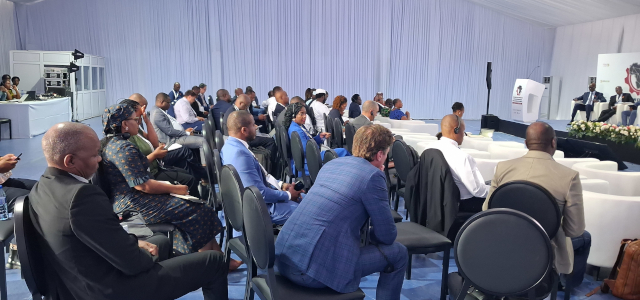
Part of the audience at the high-level Roundtable on Early-Stage Financing for PIDA–AIP Water Projects
The Roundtable showcased seven diverse early-stage projects, that is:
- Madagascar’s Antanambao Manampotsy Water Supply Project
- Burkina Faso’s Drinking Water Supply for Ouahigouya & Séguénéga
- Egypt’s PACWA Centre for Water & Climate Adaptation
- Zimbabwe’s Women and Youth-Led Drone Enterprises for Water-Efficient Agriculture
- PASA-ARISE Continental Sanitation Enterprises Initiative and ;
- Songwe Rural Water Supply & Sanitation Project for Climate Resilience in Malawi and Tanzania.
Together, these projects reflect Africa’s growing innovation in urban and rural water supply, climate adaptation, digital agriculture, gender-responsive technology, sanitation entrepreneurship, and regional cooperation. The event successfully created space for honest dialogue between project owners and financiers, helping to refine project focus, align expectations, and build momentum for Africa’s growing water investment pipeline. AUDA-NEPAD and GWPSA reaffirmed their commitment to supporting these initiatives through technical assistance, matchmaking, and coordination with development and financing partners.
The financing institutions provided targeted feedback on each project, highlighting the need for clear business models, robust feasibility and Environmental and Social Impact Assessment studies, updated data, and well-defined governance and off-taker arrangements.
Financiers and strategic partners, including IFC, the SADC Project Preparation and Development Facility, Africa Water Infrastructure Development, and AfDB, emphasised the importance of realistic timelines, credible financial models, integrated social and gender approaches, and early engagement of transaction advisors. The institutions further stressed the use of blended finance and de-risking instruments, including guarantees, to strengthen investor confidence and accelerate preparation.
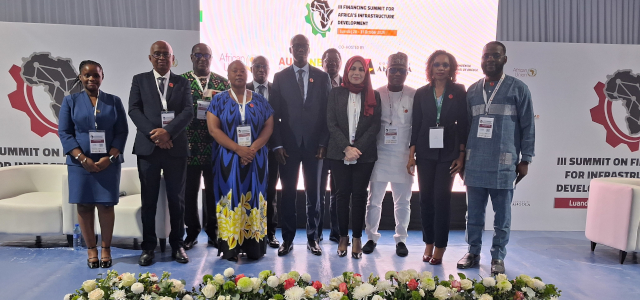
A key takeaway was the need to identify “flagship projects” that can demonstrate proof of concept and attract additional financing. Strengthening national ownership, addressing policy and regulatory barriers, consolidating existing studies, improving documentation quality, and enhancing coordination between ministries, basin organisations, and regional institutions were all identified as essential steps for advancing the pipeline.
More advanced PIDA projects were also presented at the Summit through deal room and boardroom sessions. Together, these efforts bring Africa closer to achieving the goals of PIDA PAP II and the Africa Water Investment Programme (AIP), towards mobilising sustainable investment, strengthening resilience, and advancing water security across the continent.