
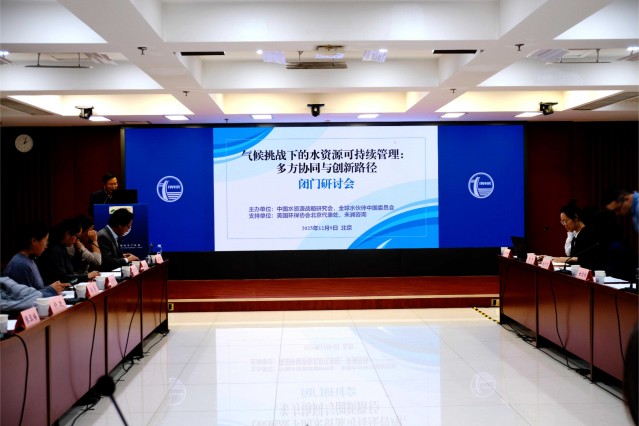
Supported by the Environmental Defense Fund(EDF) and the Bluerisk, this event, titled "Sustainable Water Management under Climate Challenges: Multi-Stakeholder Synergy and Innovative Paths," convened experts from government think tanks, research institutions, international organizations, and the private sector to coordinate a response to escalating water security risks.
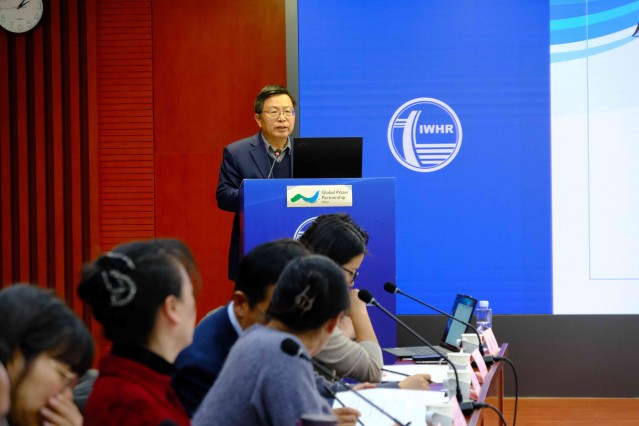 Moderated by Prof JIA Yangwen, RC, GWP China
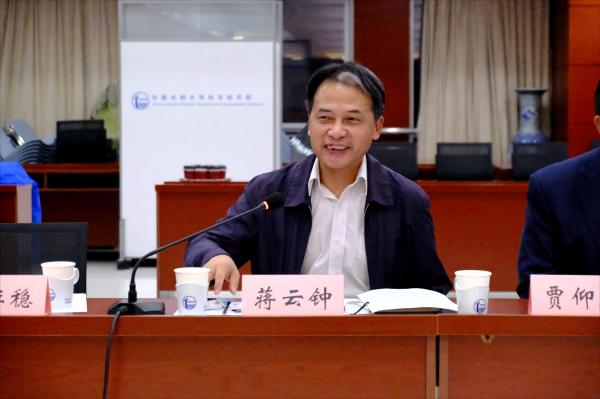 Addressed by JIANG Yunzhong, SC, GWP China & Vice President, IWHR
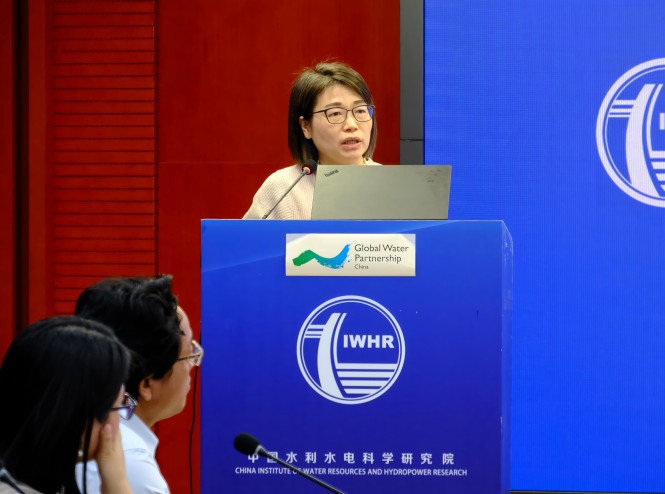
Addressed by QIU Ying, Senior Director, Environmental Defense Fund(EDF)
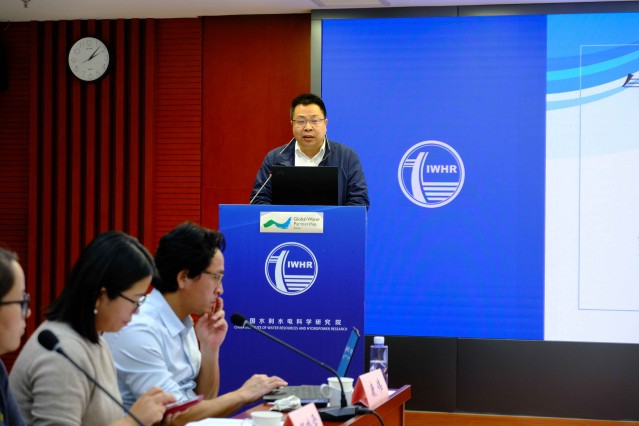 Addressed by NIU Cunwen, Deputy Chief, Water Resources Dept. IWHR
The seminar commenced with a stark reminder of the global groundwater crisis. A recent study published in Nature found that 71% of the world's aquifers are experiencing declining water levels, with 36% dropping by over 0.1 meters annually. In China, the situation is particularly dire, with groundwater resources unevenly distributed—70% concentrated in the south and only 30% in the north. Experts underscored that this "invisible lifeline," which supplies drinking water to half the global population and supports 40% of agriculture, is facing unprecedented stress from the combined impacts of climate change and human activity.
A central focus of the discussion was the shift from traditional, single-indicator management to a more comprehensive "resilience" framework. Experts from the China Institute of Water Resources and Hydropower Research introduced a four-dimensional assessment model encompassing inherent, stress, governance, and recovery resilience. Hebei Province was presented as a case study, where a decade of integrated measures, including the South-to-North Water Diversion project and groundwater extraction controls, has resulted in a steady improvement in the region's groundwater system resilience.
The agricultural sector, the largest consumer of groundwater, was identified as a critical area for adaptation. Research from China Agricultural University highlighted the severe "water-food dilemma" in the North China Plain. Winter wheat in the region requires 400-500mm of water per growing season but receives only about 100mm from rainfall, leading to heavy reliance on groundwater irrigation. Studies indicated that achieving a balance between groundwater extraction and recharge could reduce wheat yields by up to 40%, while maintaining current production levels would continue to strain aquifers.
Innovative market-based mechanisms and social engagement were highlighted as key solutions. The concept of "water compensation," where companies invest in watershed projects to offset their water consumption and generate a net positive impact, was discussed as a potent tool for corporate involvement. In the Alxa region of Inner Mongolia, initiatives such as promoting water-saving crops and upgrading irrigation facilities have successfully reduced water use per mu from 390 to 280 cubic meters, demonstrating the effectiveness of community-driven efforts.
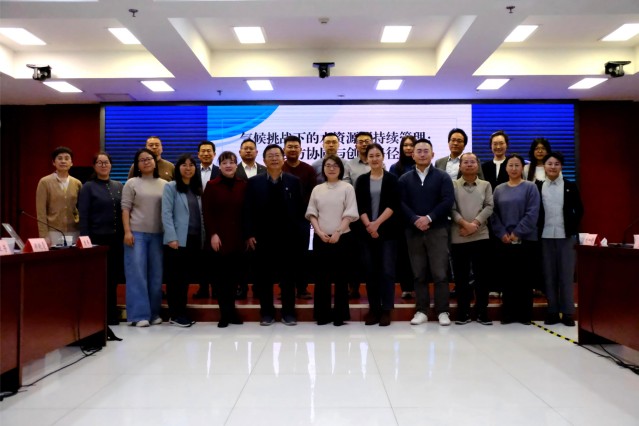
Invited Experts
The seminar concluded with a strong consensus on the necessity of multi-stakeholder governance. Experts emphasized the urgent need to dismantle departmental data barriers and foster policy synergy to address the complex, interconnected challenges. They further called for deeper integration of water resource risks into financial decision-making to direct capital toward sustainable water projects. The collective call was for a paradigm shift—from fragmented management to a collaborative, innovative, and resilient approach to securing the world's most vital resource for future generations.